LPCL 2026 Spring Leather T20
Coming Soon
This report is being prepared. Please check back soon.
Austin Cricket
Spring 2026
Player and interview stories will appear here.
LPCL 2026 Spring Leather T20
This report is being prepared. Please check back soon.
LPCL 2026 Spring Leather T20
This report is being prepared. Please check back soon.
LPCL 2026 Spring Leather T20
A spotlight can only ask the audience to look in one place at a time.
For most of the Challengers final, it swung between Tufayel Masud and Oli Bhuiyan.
Before the match, one question still hung over the two unlikely finalists: which one knew what to do with the light?
The Bengal Tigers left no doubt.
They made an imposing 237/4, bowled Austin Slayers out for 126 and won the Challengers Division by 111 runs.
That does not tell the full story.
Tufayel opened the batting with Mahab Rahman, who departed midway through the powerplay after helping them make a decent start. Oli came in, and the following over brought 21 runs, although most of the aggression still came from Tufayel.
Between the end of the powerplay and the ten-over break, Tufayel added 27 from 13 balls while Oli managed just 6 from 11. The next three overs produced 39 runs, with Tufayel continuing to lead the assault.
The fifteenth over went for 25. Oli contributed a four and a six, while Tufayel continued dismantling the Slayers’ bowling figures.
From the first ball of the following over, Tufayel reached his hundred in just 53 deliveries. He continued vandalising the Slayers’ figures, taking 28 from his final nine balls before being caught from the last ball of the over for 113 from 57.
A breathless and barely believable display of hitting had ended, but it was not about to become any easier for the already exhausted Slayers attack.
Oli Bhuiyan had spent most of the innings allowing Tufayel to occupy the spotlight.
Now it belonged to him.
Over the final four overs, he confidently took apart the bowling, ran hard between the wickets and struck a six every few balls. The Bengal Tigers added 48 during that period, with all but five coming from Oli’s bat, and finished on 237/4.
A chase of 238 demanded a rapid, wicketless start from the Slayers openers. They produced exactly that, bringing up their fifty partnership from the final ball of the powerplay.
In the following over, however, Karthik K was stumped with the score on 57, and it all came crashing down. From there, the wickets arrived with increasing frequency, with Oli even claiming the final one as Austin Slayers were bowled out for 126.
By the time the final wicket fell, the spotlight was no longer moving.
Tufayel had seized it. Oli had inherited it. Then the Bengal Tigers’ bowlers gathered beneath it.
They had entered the playoffs as the sixth seed, one of the supporting characters walking towards the dark.
They left as champions.
The Austin Bengal Tigers had not merely learned what to do with the light.
They had made it impossible to look anywhere else.
LPCL 2026 Spring Leather T20
Friction is the force that resists motion when two things move against each other. In school, it sounds like an inconvenience, like taxes or interest rates. It creates heat, wears down parts and slows movement, so machines are oiled and rough edges are polished away.
But remove it completely and movement becomes impossible to control. A car without friction cannot turn; its tires spin without carrying it forward, and its brakes become useless.
Too much wastes energy. Too little leaves nothing to grip. What matters is where friction exists, how much of it there is and who controls it.
Patel Brothers have spent the playoffs removing it from the games they play.
They are strongest when they bowl first, hold the opposition to a manageable total and trust their explosive batting to finish the job. They are most comfortable when the game presents them with a clear equation.
Across the league phase, Patel Brothers scored at 9.2 runs per over, around 0.7 faster than Sunrisers. However, they conceded 7.2 runs per over, approximately 0.5 more than their final opponents.
Both their quarterfinal and semifinal targets were 161. They chased them down with 6.4 and 3.4 overs to spare, respectively. Across their five completed chases this season, Patel Brothers have scored at an absurd 10.23 runs per over and finished with nearly five overs remaining on average.
A target can induce pressure and bad decisions. For Patel Brothers, however, it seems less like pressure than a set of instructions—and they have developed a habit of finishing early.
Austin Sunrisers play a different game.
They introduce resistance.
During the league phase, they conceded approximately 6.7 runs per over, the best rate in any division this season, not just Legends. They do not rely on bowling teams out or producing one destructive spell. Instead, they change bowlers, close off scoring areas and make each run harder to find.
It showed in their quarterfinal.
After an excellent start with the bat, Sunrisers fell from 109/2 to 111/5 before recovering to reach 169/8. The OGs lost an early wicket but continued attacking, reaching 92/3 after ten overs and needing only 78 from the final ten.
Then Sunrisers applied the brakes.
Bhuvan Challa finished with figures of 2 for 23 from four overs, including an eighteenth over that cost only four. The OGs scored just 58 runs across the next nine overs, leaving them needing 20 from the last.
Even after a chaotic final over containing two no-balls and two wides, the OGs still required six from the final delivery. They managed only one.
In the semifinal, Sunrisers recovered from 24/2 to reach 202/7 before holding Gully Boyz to 181/9 and advancing to the final.
What makes both teams championship-worthy is that they can play either role.
When the two sides met during the league phase, it was Patel Brothers who applied the brakes. They restricted Sunrisers to 143 and won by 24 runs. Sunrisers have also shown that they can accelerate, producing 232/4 during the league phase and 202/7 in their semifinal.
If Patel Brothers make the game flow as freely as their previous chases, Sunrisers may never have enough time to build pressure. If Sunrisers produce dot balls and uncertainty, Patel Brothers will be forced into a playoff contest they have not yet had to survive.
Both teams have proved they can accelerate. Both have proved they can apply the brakes.
The trophy will belong to whichever one decides when the game moves—and when it stops.
LPCL 2026 Spring Leather T20
Every heist movie begins by telling you what everybody does.
There is a detailed plan, with a specialist at every turn. The safecracker, for the safe. The hacker, for the computer. Someone inside the building making sure everything goes unnoticed, and someone else sitting in a car, waiting to drive away very quickly.
Then it goes wrong.
The driver ends up trying to open the vault. The hacker and the safecracker argue over who has to drive. And somehow, the person with the seemingly least important job becomes the reason the entire plan succeeds.
T20 finals can do this to teams.
Royal Challengers Bengaluru entered the 2026 IPL final with a batting lineup that made a target of 200 look like 160. Gujarat Titans arrived with a bowling attack that made 160 feel like 200. The expected contest was GT’s bowling against RCB’s batting.
Yet the final was all but decided before that matchup had a chance to define it.
RCB’s bowlers, widely perceived as their secondary strength, restricted GT’s supposedly secondary suit—their batting—to just 155/8. For all the attention surrounding their exhilarating primary skill, it was the better-rounded team that became champion.
Three months later and half a world away, the same question will be asked of two more teams.
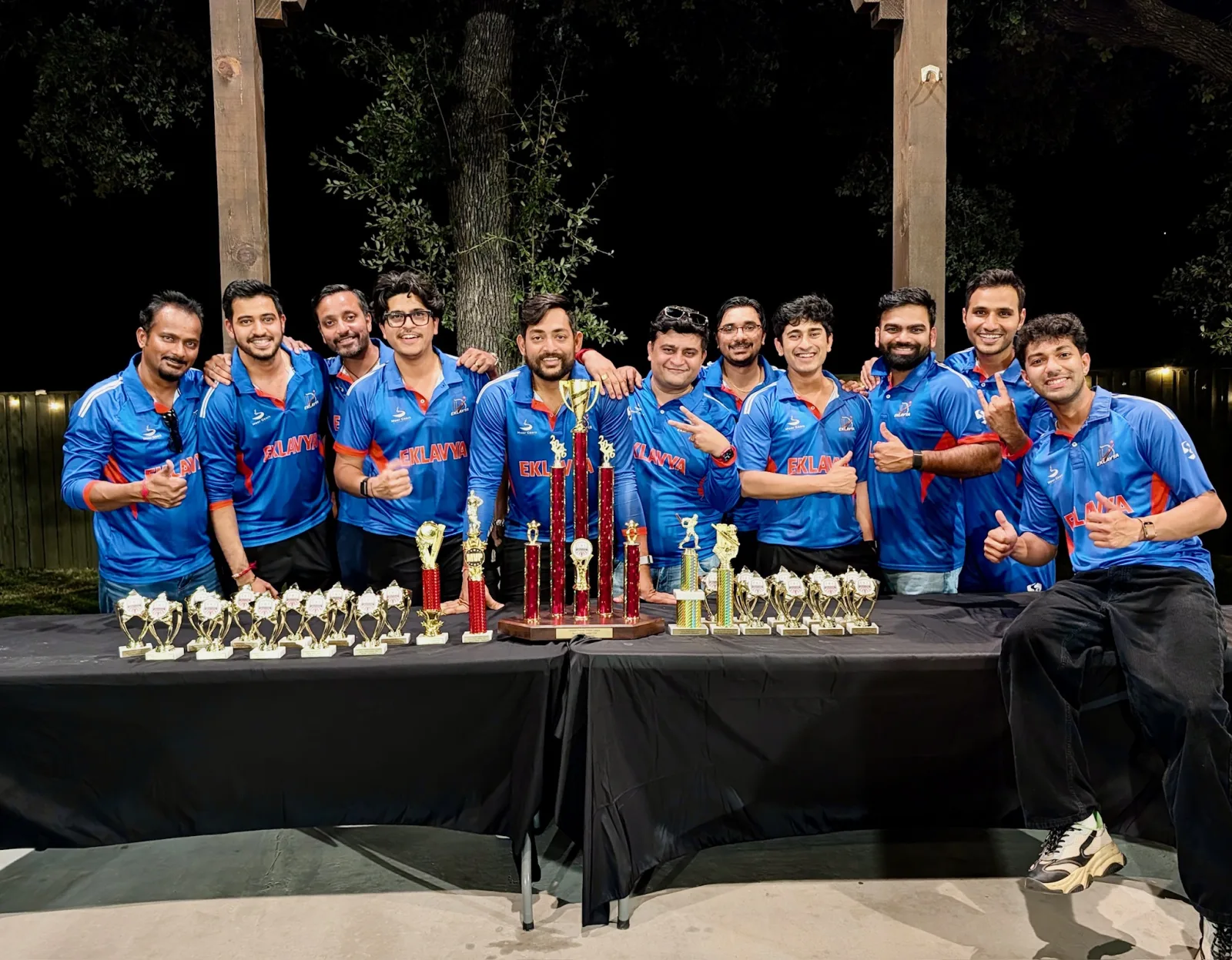
Eklavya’s batting has been dominant. They have recorded seven totals above 180 and won seven of their eight chases, often with multiple overs to spare. In the playoffs, they chased 162 in only 14.4 overs before hunting down 182 in 18.3. Different batters have stood up in different high-pressure matches, scoring heavily and carrying the team home. Their bowling, however, concedes close to 160 per game and has struggled to sustain pressure after breaking through the top order.
The Eagles have built a completely different but equally effective team. They score only about 160 per game but concede roughly 140, producing a similar winning margin without the same volume of runs. They have bowled out only two teams, so this is not an attack that usually wins by tearing through an entire lineup. Instead, it suffocates batters, starves them of runs during crucial phases and allows the resulting pressure to produce mistakes.
Those are the roles laid out for this final. The script presents Eklavya’s explosive batting against the Eagles’ lockdown bowling as the main event. Yet the result may depend on Eklavya’s penetrative but inconsistent bowling rising to the occasion, or the Eagles’ uneven but resilient batting finding enough on the biggest day.
Because finals are often won by the safecracker who can drive.
LPCL 2026 Spring Leather T20
There is a neatness to rankings.
Instead of saying, “You’re good,” and, “You’re not,” there is one—the best—at the top, a few pretty good ones just below, and the rest scattered beneath.
If you do well, you go up. If you do not, you go down. But by the end of a tournament, the table starts to feel less like a record and more like a final verdict on what is going to happen. Teams outside the top four fade into obscurity as the main event begins to unfold. The others walk home, offstage, finished with their supporting roles.
Every so often, though, just as the nearly men are disappearing into the dark, somebody in the lighting booth gets it wrong.
The spotlight swings too far. It misses the stars it was meant to find.
And suddenly, almost by accident, it lands on the people walking away. Everyone in the audience turns to look.
The nearly men stop at the edge of the dark, realizing the applause could still be theirs.
Nobody is quite sure what to make of it.
These were not the people the crowd had been watching throughout the show. These were not the names printed largest on the program. They were on the back of the booklet, in the smallest legally permitted font.
But that matters little now. The audience is waiting. The stage is open. And now the supporting characters must produce a grand finale capable of outdoing the main stars.
Rankings can decide where you start.
They cannot decide what you do once everybody is watching.
In the Challengers Division, the light has moved.
Not towards the first seed, nor the second, nor even the other two teams that spent the season comfortably near the top.
It has landed on the Austin Bengal Tigers and Austin Slayers.
It would be easy to call this an accident. A fluke. But the deeper you dig into the Bengal Tigers and Slayers, the less it feels like an accident—and the more it feels like the table was hiding something.
Behind the wins, losses and points, there were other numbers. Quieter ones. Numbers that did not move a team up the rankings but revealed how quickly they scored, how well they bowled and how often they were actually the worse side.
The numbers were sitting there all season.
The spotlight just made us notice them.
The division-average run rate was almost exactly eight runs per over. The Bengal Tigers scored at nearly 8.5 runs per over while conceding only 7.9. The Slayers scored at around 8.3 and gave away 7.8. Although those differences may seem small, they translate to roughly 60 additional runs scored across the season and 40 fewer conceded.
The Bengal Tigers are the statistically superior batting side, but only slightly. In the quarterfinals, they beat the third-seeded Royal Strikers before facing the second-ranked Austin Renegades in the semifinals. They managed only 138/7 from their 20 overs, and the walls seemed to be closing in. With so few runs to defend, they somehow prised out all ten Renegades wickets for just 116 and moved into the final.
The Slayers, on the other hand, are the slightly more economical side. In the quarterfinals, they were drawn against the division’s top-ranked team, the ATX Panthers, and always appeared to be ahead of the game. They took wickets at regular intervals, bowled the Panthers out for 154 and completed the chase with eight wickets in hand after all three of their top-order batters scored more than 30.
Next came the Falcons, and the Slayers’ batting stood up once again, carrying them to 177/3. With the Falcons the fastest-scoring side in the division, it was by no means a safe total. The Slayers made it look like one, though, bowling them out for just 135 and comfortably advancing to the final.
Maybe the spotlight did swing too far.
Maybe the Austin Bengal Tigers and Austin Slayers were never the names it was supposed to find.
That hardly matters now. There is only one thing left to discover.
Which one knows what to do with the light?
Fall 2026
Player and interview stories will appear here.
Tournament features and analysis will appear here.
LPCL 2026 Fall Leather T20
Two batters outscored the rest of their respective teams combined this weekend.
One finished unbeaten and went home with a nine-wicket victory. The other made 93 and still lost by 54 runs.
Elsewhere, a chase began with wickets from each of its first two balls and somehow ended successfully, one bowler needed only six deliveries to take three wickets, and extras top-scored for an entire team.
The LPCL Fall Leather T20 properly kicked into gear this weekend, with eleven matches across the Legends and Champions divisions. Premier has yet to begin, but there was already far more happening than the results alone could explain.
With every team still having played no more than one match, it is too early to draw much from the standings or discuss qualification scenarios. That part of the roundup will arrive once the table starts moving.
The Legends Division’s first four matches produced two innings that completely consumed their respective scorecards.
The weekend’s headline belonged to Venky Gj, who struck an unbeaten 114 from 52 balls as The Mob mowed down OGS’s 154 in only 13.3 overs. Venky made 114 of The Mob’s 157 runs; everyone else, including extras, contributed 43.
Rishi Veeramani produced the unsuccessful version of the same innings. He made 93 of Austin Blasters Youth’s 147 runs against Yorkers, while the rest of the scorecard supplied only 54. Yorkers’ imposing 201/7 meant that even Rishi’s remarkable lone effort could not bring the target within reach.
TOPGUNS UNITED completed the weekend’s most unlikely chase. They lost wickets from each of the first two balls of their innings, slipped to 28/4 and still chased down Phoenix Warriors’ 150 with ten balls remaining.
Elsewhere, Ravindra Divi’s 67 powered Mustangs to 198/4 and a 44-run victory over Austin OGs.
The Champions Division supplied most of the weekend’s action, with seven matches played, and it largely belonged to the chasing teams. Five of the seven winners batted second, although two of those victories came in shortened matches.
Mohan Reddy’s 77 from 40 balls helped Blue Caps make the quickest work of a target, chasing Desi CowBoys’ 149/9 in just 13.1 overs. OG Cheetahs chased down Greyhounds’ 152 with seven wickets and 15 balls remaining, while Texas Titans lost seven wickets while navigating the division’s lowest-scoring chase.
The two successful defences were built around outstanding bowling performances. BSC Austin made the division’s highest total of 196/4 before Tejas Bhakta’s 4/16 helped secure a 23-run victory over Dhurandhars.
Bar Raisers lived up to their name and raised the bar with the ball, turning a competitive 158/4 into a 54-run victory by restricting Austin Capitals to 104/9.
Hemanth Janyavula’s 55 from 32 balls helped Austin Titans defeat Mavericks Legends, while Wolverines completed the remaining victory against Austin Hawks. Both wins came in matches where the second innings was shortened.
Those numbers tell us who scored the most runs, took the most wickets and produced the largest victories.
They do not tell us who appeared to have somewhere else to be.
For that, we need the unofficial awards.
Ranjit made 54 from 40 balls with seven fours and no sixes, helping TOPGUNS UNITED recover from 28/4 and complete a nervy chase.
Venky appeared to have somewhere else to be, finishing off OGS’s 154 in only 13.3 overs while contributing the small matter of 114* from 52 balls.
In an impressive display of mutual generosity, both teams gifted the other exactly 27 extras.
Suhash arrived, bowled one over, mopped up the lower order with 3 wickets and left.
Austin Blasters Youth briefly recreated the Sachin-dominated Indian scorecards of the 1990s. Rishi made 93 of their 147 runs, keeping an otherwise distant chase alive almost single-handedly.
Extras contributed 29 runs to SA Capitals’ total, more than any listed batter in their innings.
That concludes the first busy weekend of the Fall Leather T20. With no matches scheduled over the Labor Day weekend, everyone gets a short breather before the competition resumes on September 12.
Fall 2026
Fall playoff brackets will appear here later in the season.
Ansh Bhargava is a high school student, youth LPCL player, and cricket fan. He maintains Silly Point ATX as a personal side project. Thank you for reading.
Have feedback or a correction? Email [email protected]. This inbox is parent-monitored.