LPCL 2026 Spring Leather T20
A Trophy for More Than Eleven
Bengal Tigers have always seen themselves as more than just another LPCL side. Every player on the team is from Bangladesh. They play in the colors of their flag, see each other as brothers, and take pride in representing their country and community in Austin.
Even then, they didn’t realize how much the team meant beyond the players themselves until the final.
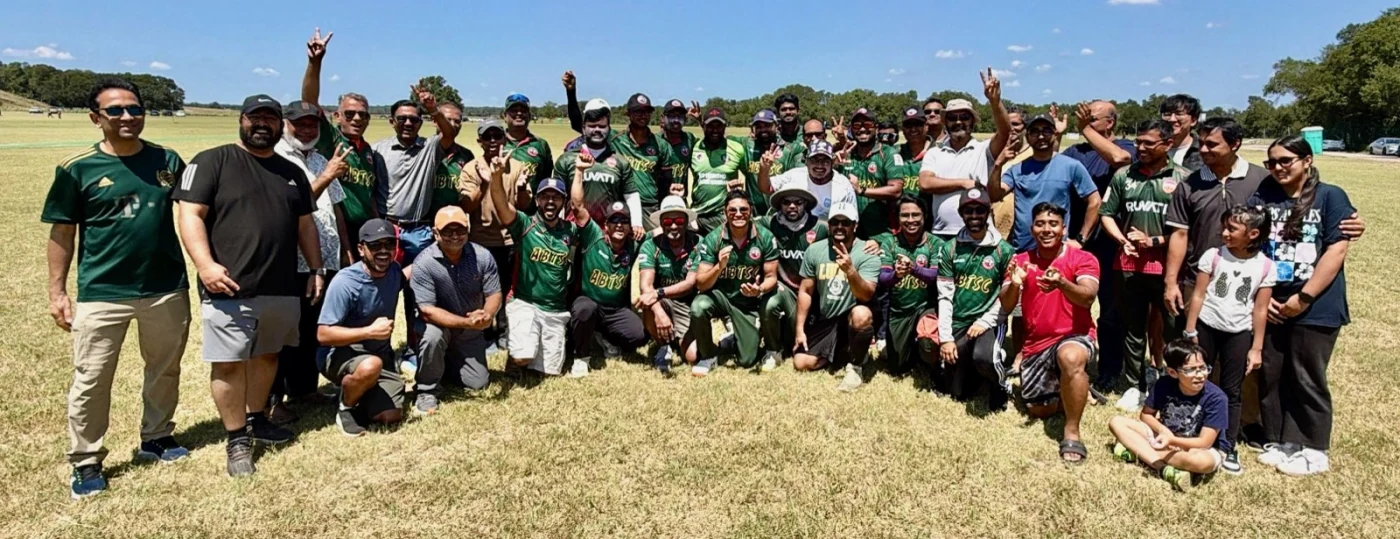
Around 40–50 people gathered at the ground, hoping that, after years of waiting, this would finally be the day the Tigers found the pot of gold. After the win, the team stayed at the ground for hours, celebrating and eating biryani that their friends and family brought for them.
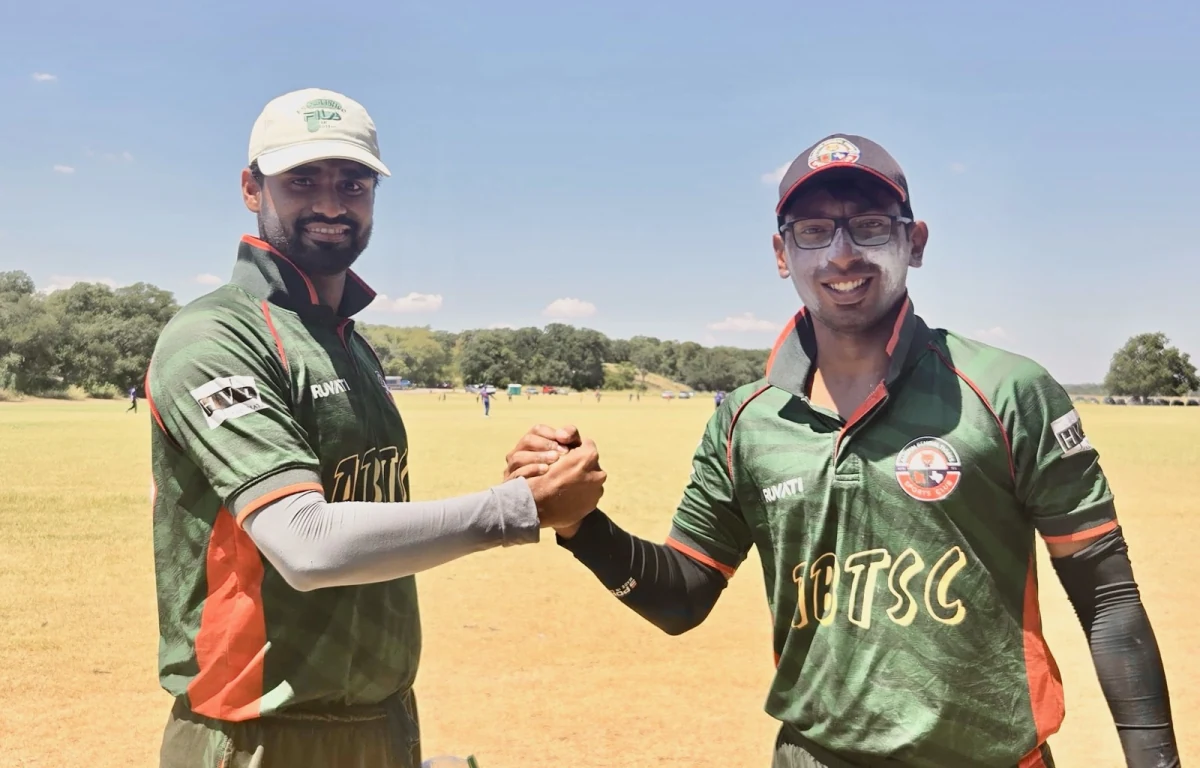
For captain Rafidur Rahman, this win carried even more weight. He was moving to Dallas, so this was his last game as a regular player in Austin.
All of this had looked unlikely a few weeks earlier. Bengal Tigers had finished sixth on the points table. Rafid admitted that the team “didn’t hold our nerves correctly and… didn’t execute properly either.” Still, even from sixth, they believed they “had a team that could beat the best.”
Rafid and his vice-captain, Syed Tousiful Haque, talked about building a professional and smooth setup for the team. They had a clear goal, defined roles for each player, and tried to build around players who would be consistently available. If a player failed, they stuck with him and helped him rebuild his confidence. That took pressure off the players in the playoffs, since many of them already had clearly established roles.
In the playoffs, it all came together rather nicely for Bengal Tigers. They wanted an extra spinner, and even though Tahmid Hasan Rupam had not bowled much during the season, he performed well when called upon, bowling his full four overs in all three knockout games. They also had a pace bowler, Roktim Rahman, who finished as the division’s highest wicket-taker with 23 wickets in 12 matches. They had a clear game plan too. Rafid told his bowlers, “I don’t want wickets. I just want dot balls. That’s what leads to wickets.”
In the semifinal, defending just 138, almost half the balls Bengal Tigers delivered in the powerplay were dot balls. That pressure eventually helped produce all 10 Renegades wickets. They also gave away only one wide in that game, and Rafid thinks that “really showed our character.” Even their fielding, which Rafid admitted they were not known for, was strong in the playoffs.
When asked where his team could improve, he pointed to two big things—fielding and batting depth. “Almost all of us are working or students,” he said, “so we don’t get a lot of time to practice.” He acknowledged that if they want to be a top team, their fielding has to be top-notch. He also said that last season their lower-middle order did not have the same impact as the top order. This season, he wants the lower-middle order to improve as well.
Captaining Bengal Tigers is a unique challenge, Rafid says. He is among the youngest players on the side, so he finds it a bit awkward to tell people much older than him what to do. However, his philosophy is that “on the field, everyone is equal.” That helps him captain senior players. He also had to have uncomfortable conversations during the playoffs, when many people were available and he had to pick his best eleven. Those conversations were not always easy, but by the time the playoffs arrived, everyone knew where they stood.
When talking about future ambitions, vice-captain Tousif did not hold back. He had a full-fledged short- and long-term plan. His short-term plan was to strengthen their batting depth and finish in the top two so they could make their way up to Premier. Their ultimate goal is for “ABT [Austin Bengal Tigers] to get to the Premier division and most likely win that too.”
Perhaps the most impressive part of this side is that they have not become complacent after a title win and still have ambitions to keep improving.
But years from now, Rafid does not think the standings, wickets or even the trophy will be what he remembers most. “I feel like I’m playing with my brothers and not with team members,” he said. “Years down the line, that’s what I’m gonna remember.”
For a team built around shared colors, shared culture and a community that turned up when it mattered most, that feels fitting.
Years from now, the exact scores may fade, but the players will not forget their brothers standing beside them when they finally brought something home.
Photographs provided by Austin Bengal Tigers and published with permission from captain Rafidur Rahman.